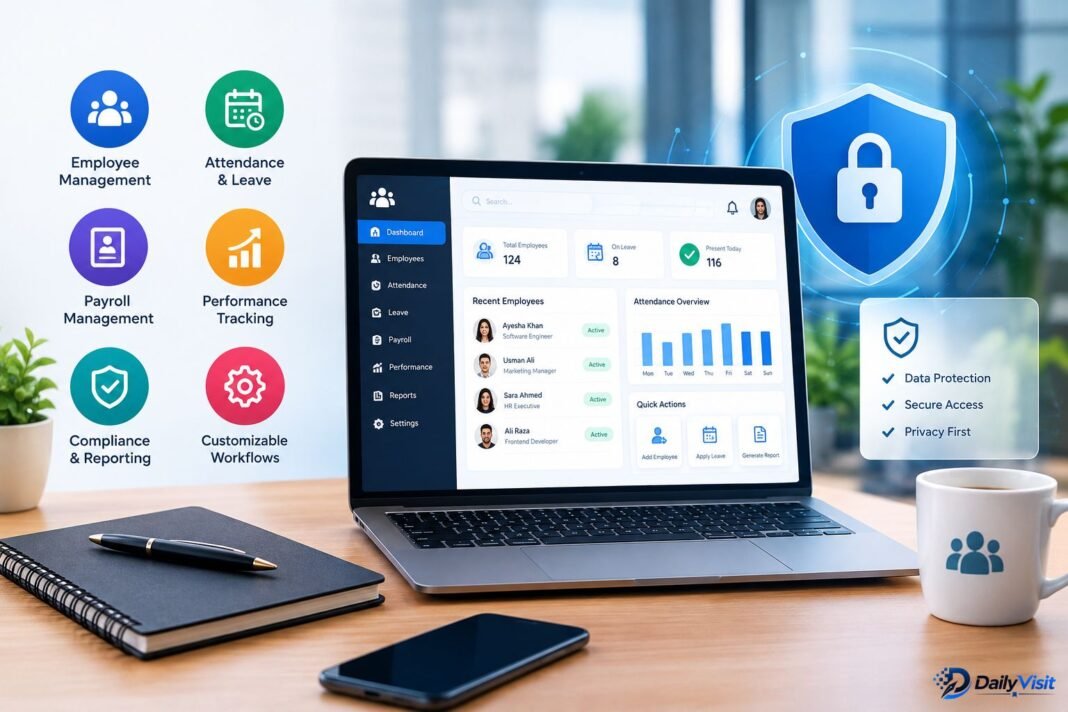

HRMtaila! Managing employees involves much more than hiring and maintaining attendance records. Businesses also need to organize employee information, process payroll, manage leave requests, and handle everyday workplace administration. HRMtaila is described as an HR management platform designed to bring these activities together in one place.
This guide explains what HRMtaila is, the types of HR tools it can provide, how businesses can use such a platform, and why security and privacy are important when managing employee information.
What Is HRMtaila?
HRMtaila is an HR management platform focused on helping organizations manage common human-resource activities digitally. Its core purpose is to organize important employee and workplace information while reducing the need for disconnected spreadsheets, documents, and manual processes.
The platform can be particularly useful for businesses that need a centralized way to manage areas such as:
- Employee records
- Payroll information
- Leave and time-off management
- Workplace administration
- Employee-related documentation
- HR workflows and administrative tasks
By bringing these functions together, HRMtaila can help HR teams maintain more organized records and simplify routine administrative work.
Key HRMtaila Tools and Features
The usefulness of an HR platform largely depends on the tools it provides. HRMtaila focuses on several areas that are central to everyday employee management.
1. Employee Records
Maintaining accurate employee records is one of the most important HR responsibilities. Employee information can include personal details, employment information, job roles, documentation, and other administrative records.
A centralized HR system can make it easier for authorized HR personnel to locate and update employee information without searching through multiple files or spreadsheets.
Keeping employee records organized can also help businesses maintain consistency when managing staff throughout the employee lifecycle.
2. Payroll Management
Payroll is another major part of HR administration. Businesses need to keep track of employee compensation and related payroll information accurately and consistently.
An HR management platform such as HRMtaila can provide tools for organizing payroll-related data and supporting payroll administration. Depending on the platform’s configuration and available features, these tools may help HR teams reduce repetitive manual work and maintain better records.
Because payroll information is sensitive, access controls and data protection are especially important in this area.
3. Leave Management
Managing employee leave manually can become difficult as an organization grows. HR teams may need to track vacation days, sick leave, personal leave, approvals, and remaining balances.
HRMtaila’s leave-management functionality can provide a centralized approach to handling time-off information. Instead of relying on separate spreadsheets or messages, employees and HR staff can potentially use a structured process for submitting, reviewing, and recording leave requests.
A centralized leave system can also make it easier to maintain up-to-date records.
4. Workplace Administration
Human resources involves many administrative responsibilities beyond payroll and employee records. Workplace administration can include maintaining staff information, managing internal processes, organizing documentation, and supporting day-to-day employee operations.
HRMtaila is designed around this broader HR-management requirement. A centralized platform can help businesses bring different administrative activities into a more organized workflow.
Why Businesses Use HR Management Platforms
Traditional HR administration often involves spreadsheets, email conversations, paper documents, and separate software systems. While these methods can work for smaller organizations, they may become harder to maintain as the workforce expands.
An HR management platform can provide several practical advantages.
Centralized Information
Keeping employee information in one system can make HR records easier to organize and access. Authorized users can potentially find relevant information without checking multiple locations.
Reduced Manual Administration
Automating or organizing repetitive HR processes can reduce the amount of routine data entry required from HR staff. This can allow teams to spend more time on employee support and strategic responsibilities.
Better Record Management
Digital records can provide a structured way to maintain employee information. Consistent recordkeeping can also make it easier to update information when employee circumstances change.
Improved Workflow
Processes such as leave requests and approvals can become easier to manage when they follow a defined digital workflow. This can reduce confusion about the status of requests and responsibilities.
HRMtaila and Data Security
Security is an important consideration for any HR management platform because HR systems can contain sensitive information.
Employee records and payroll-related information should be protected against unauthorized access, accidental disclosure, and other security risks. Businesses evaluating HRMtaila should therefore pay attention to the security controls available on the platform.
Important areas to consider include:
- User authentication
- Role-based access
- Permission management
- Secure data transmission
- Account security
- Data backups
- Administrative controls
- Security monitoring
Not every organization has the same security requirements. Companies should review the platform’s current security documentation and configuration options before storing sensitive employee information.
HRMtaila and Privacy
Privacy is closely connected to security but focuses specifically on how personal information is collected, used, stored, and shared.
An HR platform may handle information such as employee names, contact details, employment records, payroll information, and leave records. Businesses should understand what information the platform collects and how that information is processed.
Before adopting HRMtaila, organizations should review applicable privacy policies and determine whether the platform’s practices align with their legal and internal requirements.
Organizations should also consider who can access different categories of employee information. Employees responsible for payroll, for example, may require access to information that should not be available to every member of the workforce.
How HRMtaila Can Support Different Businesses
The need for HR software varies depending on company size and structure.
Small Businesses
Small businesses often have limited HR resources. A centralized platform can help them organize employee information and administrative processes without maintaining numerous separate files.
Growing Companies
As companies hire more employees, managing records and leave manually can become increasingly difficult. A structured HR system can provide a scalable approach to employee administration.
Larger Organizations
Larger organizations may have multiple departments and different levels of HR access. In such environments, permissions, workflows, data security, and centralized records become particularly important.
Things to Consider Before Using HRMtaila
Although an HR management platform can simplify administration, businesses should evaluate their requirements before choosing a solution.
Consider the following questions:
- Does the platform support the number of employees in your organization?
- Does it provide the employee-record features your HR team needs?
- How does payroll management work?
- What leave-management options are available?
- What user permissions and security controls are provided?
- How is employee data stored and protected?
- Does the privacy policy meet your organization’s requirements?
- Is training or customer support available?
- Can the platform integrate with other business systems?
- What are the costs associated with using the service?
These questions can help businesses determine whether an HR platform fits their operational requirements.
Benefits and Limitations of HRMtaila
Like other digital HR solutions, HRMtaila can offer practical benefits while still requiring careful evaluation.
| Area | Potential Benefit |
|---|---|
| Employee Records | Centralized employee information |
| Payroll | Organized payroll-related administration |
| Leave | Structured time-off management |
| Administration | More organized workplace processes |
| Accessibility | Easier access for authorized users |
| Security | Centralized security and permission controls |
| Privacy | A dedicated environment for managing HR data |
However, businesses should not assume that every feature or security capability is automatically available. Features, pricing, integrations, and policies can change over time, so organizations should verify current information directly with the platform before making an implementation decision.
Frequently Asked Questions
Q1. What is HRMtaila?
HRMtaila is described as an HR management platform designed to help businesses manage employee records, payroll, leave, and workplace administration.
Q2. What can HRMtaila be used for?
HRMtaila can be used for common HR activities such as maintaining employee information, organizing payroll-related data, managing leave, and supporting workplace administration.
Q3. Is HRMtaila suitable for small businesses?
An HR management platform can be useful for small businesses that want to centralize employee records and reduce manual HR administration. Businesses should evaluate the platform’s current features and pricing against their specific requirements.
Q4. Why is security important for HRMtaila?
HR systems can contain sensitive employee and payroll information. Strong authentication, permissions, access controls, and other security measures can help protect this information from unauthorized access.
Q5. What should businesses check before using HRMtaila?
Businesses should review available HR features, payroll and leave tools, security controls, privacy practices, integrations, scalability, support, and pricing before deciding whether HRMtaila meets their needs.
ALSO READ : Capabilisense Platform: Features, Benefits, Uses and Everything You Need to Know
Final Thoughts
HRMtaila represents the type of HR management platform businesses can use to organize important employee and workplace processes. Its focus on employee records, payroll, leave, and workplace administration addresses several of the most common responsibilities handled by HR teams.
The biggest value of an HR platform comes from bringing these processes into a structured environment. At the same time, businesses should evaluate functionality, security, privacy, user permissions, scalability, and support before adopting any HR software.
For organizations considering HRMtaila, understanding both its HR tools and its approach to employee-data protection is an important part of making an informed technology decision.