
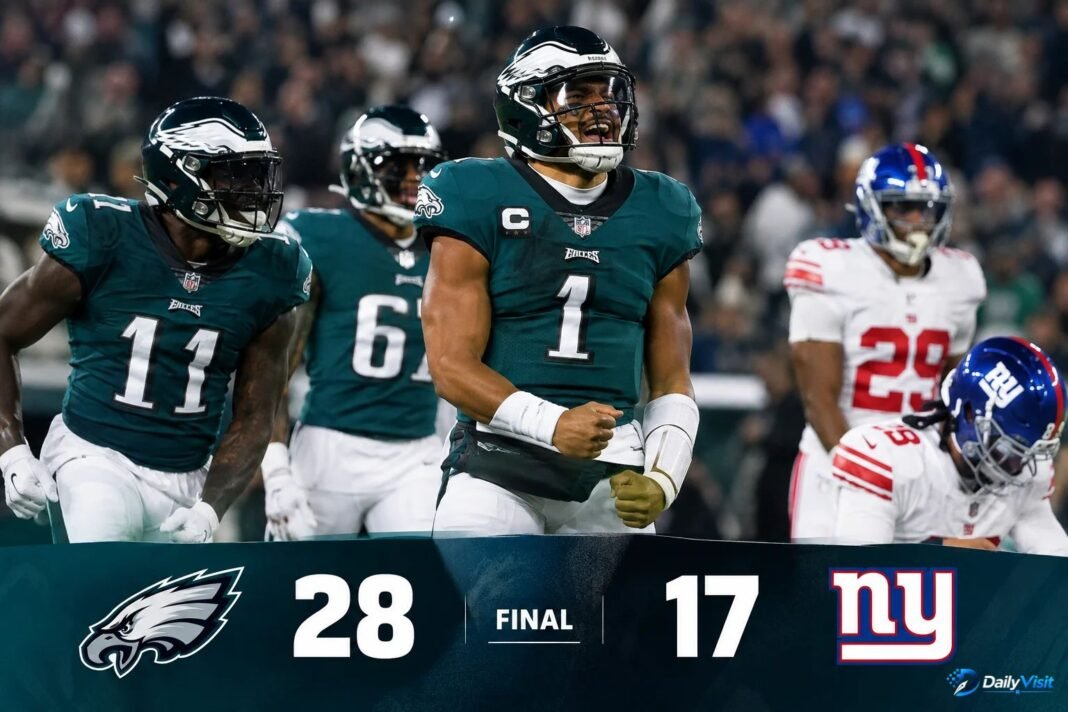

Philadelphia Eagles vs New York Giants match player stats reveal far more than a final score. Passing efficiency, rushing yards per carry, sacks, and turnover differentials tell the real story of who controlled the game and why. This guide breaks down which stats matter, how to read them in context, and what they signal for playoff races and player milestones.
Few rivalries in the NFC East carry the weight of Eagles vs Giants. These two franchises have been trading blows since 1933, and every fresh meeting adds another chapter to one of football’s longest-running feuds. But beyond the trash talk and division bragging rights, the real value for fans, analysts, and fantasy football managers lies in the numbers.
Understanding Philadelphia Eagles vs New York Giants match player stats isn’t just about knowing who won. It’s about identifying which individual performances shifted momentum, which units carried the game plan, and how those numbers ripple outward into season-long trends. A quarterback’s completion percentage in the red zone, a running back’s yards after contact, a cornerback’s forced incompletions — these details separate surface-level box scores from genuine football insight.
This guide walks through how to analyze Eagles-Giants statistics with the depth they deserve. You’ll learn what historical context shapes the rivalry, which player categories to watch on both sides of the ball, how to break a game down half by half, and what these numbers mean for standings, playoff seeding, and individual milestones. Whether you’re prepping for your next fantasy lineup decision or just want sharper insight into NFC East football, this breakdown will give you a framework that applies to any Eagles-Giants matchup, past or future.
A Brief History of the Eagles-Giants Rivalry
The Eagles and Giants have faced off more than any other pairing in the NFC East, a division built almost entirely on tight, physical, low-margin football. Both teams entered the NFL in the early 1930s, and their proximity — separated by roughly 100 miles along the I-95 corridor — turned every meeting into a statement game for fans and players alike.
Over the decades, the rivalry has produced iconic moments: last-minute field goals, blocked punts returned for touchdowns, and quarterback duels that defined entire seasons. What makes this matchup particularly compelling from a statistical standpoint is its unpredictability. Records don’t always dictate outcomes. A Giants team with a losing record has upset a division-leading Eagles squad before, and vice versa. That volatility is exactly why digging into Philadelphia Eagles vs New York Giants match player stats matters so much — form on paper rarely tells the whole story.
Each new matchup also carries weight depending on where it falls in the schedule. A Week 3 meeting might simply set an early tone, while a late-season clash can directly decide playoff seeding, division titles, or a Wild Card berth. Context always shapes how much significance to assign to any single stat line.
Key Player Performances to Watch
When evaluating any Eagles-Giants game, certain player categories consistently drive the outcome. Breaking stats down by position group makes the analysis far more useful than looking at aggregate team totals alone.
Philadelphia Eagles Offensive Statistics
For the Eagles, quarterback efficiency sets the tone. Metrics worth tracking include completion percentage, yards per attempt, and third-down conversion rate — all of which show whether the passing game is sustaining drives or relying on explosive plays. On the ground, running back workload and yards per carry indicate how much the offensive line is winning at the point of attack. Wide receiver target share and yards after catch further reveal which playmakers are being featured in the game plan.
Philadelphia Eagles Defensive Statistics
Defensively, sacks and quarterback hits show pressure generation up front, while tackles for loss highlight run-stopping discipline. Pass breakups and interceptions from the secondary indicate how well the Eagles are limiting explosive passing plays, which is often the deciding factor in a tightly contested division game.
New York Giants Offensive Statistics
On the Giants’ side, quarterback pressure-to-sack ratio is telling — a high number of pressures without matching sacks can suggest a mobile quarterback extending plays, while a low ratio may point to a struggling offensive line. Rushing attempts and yards per carry matter just as much, since Giants game plans have historically leaned on establishing the run to control tempo against Philadelphia’s front seven.
New York Giants Defensive Statistics
Giants’ defensive stats worth tracking include total pressures, missed tackle rate, and yards allowed per play. These numbers show whether the defense is containing Philadelphia’s skill players or getting stretched thin across four quarters.
Breaking Down the Match Half by Half
A full picture of Philadelphia Eagles vs New York Giants match player stats requires more than a final tally — it demands a half-by-half view.
In the first half, look at time of possession and early third-down conversions. These numbers often reveal which team is dictating tempo and forcing the opponent into a reactive game plan. A team that wins first-half time of possession by a wide margin typically limits its opponent’s offensive snap count, directly affecting counting stats like completions and rushing attempts.
The second half tells a different story. Fatigue, adjustments, and score-driven play-calling all shift the statistical profile. A team trailing by two touchdowns will pass more, inflating certain receiver and quarterback numbers, while a team protecting a lead will lean on the run, padding rushing totals but possibly limiting explosive plays. Identifying these turning points — a strip-sack, a fourth-down stop, a long touchdown drive — gives real meaning to the raw numbers on the stat sheet.
Match Player Stats Breakdown: Leaders and Standouts
Every Eagles-Giants game produces standout individual performances worth isolating from the team totals. Leading scorers, whether through touchdowns or field goals, usually correlate directly with red-zone efficiency, so cross-referencing scoring output with red-zone attempts adds valuable context.
Top performers on both sides often emerge in yardage categories — a receiver with a season-high catch total, a running back who broke a long touchdown run, or a linebacker who logged double-digit tackles. Defensive standouts deserve equal attention: a cornerback who allowed a low completion percentage in coverage, or a defensive end who consistently pressured the quarterback, often does more to swing a game than the box score suggests at first glance.
How These Stats Affect Season Rankings and Playoff Implications
Individual Philadelphia Eagles vs New York Giants match player stats don’t exist in a vacuum. They feed directly into broader season narratives. A dominant rushing performance can boost a running back’s standing in the league’s rushing leaderboard, while a multi-sack game can move a pass rusher into Defensive Player of the Year conversations.
At the team level, this matchup frequently carries playoff weight given the division’s competitiveness. A win can shift tiebreaker scenarios within the NFC East, directly influencing seeding. For players nearing career milestones — a running back closing in on a rushing yardage benchmark, or a quarterback approaching a career passing yardage total — these division games often provide the stage where history gets made.
Comparative Analysis: Eagles vs Giants Performance Metrics
Comparing performance metrics across the roster highlights broader trends beyond a single game. Tracking how Eagles skill players perform against Giants’ defensive backs over multiple seasons, for example, can reveal matchup advantages that repeat year after year. Similarly, analyzing sack totals and pressure rates for both front sevens across multiple meetings shows which team has consistently won in the trenches.
Statistical trends across several Eagles-Giants matchups often expose notable improvements or declines in player performance. A receiver who struggled against Giants’ coverage schemes in previous seasons but broke out in a recent game signals a real shift in matchup dynamics, not just a one-off outlier. This kind of longitudinal view turns a single box score into a genuinely predictive tool for future contests.
What These Numbers Mean Going Forward
Reading Philadelphia Eagles vs New York Giants match player stats with real depth means looking past the final score and into the details that actually decided the outcome — efficiency, situational performance, and half-by-half shifts in momentum. These numbers shape playoff pictures, fuel individual milestone chases, and set the tone for how both franchises approach their next meeting.
As the rivalry continues, tracking these statistical trends game after game builds a much sharper understanding of where both teams stand and what to expect the next time Philadelphia and New York meet on the field.
What stat do you think tells the real story of an Eagles-Giants game — passing efficiency, rushing volume, or defensive pressure? Share your take in the comments.
ALSO READ : Software GDTJ45 Builder Problems
Frequently Asked Questions
Q1. What stats matter most in an Eagles vs Giants game?
Passing efficiency, rushing yards per carry, sacks, and turnover differential typically matter most, since they reflect which team controlled the line of scrimmage and limited mistakes.
Q2. Why is the Eagles-Giants rivalry considered significant in the NFC East?
The two teams have played each other since the 1930s, and their divisional proximity has made every matchup a high-stakes game for standings and bragging rights alike.
Q3. How do half-by-half stats help explain a game’s outcome?
Breaking a game into halves shows how tempo, adjustments, and score-driven play-calling shift statistical output, revealing turning points that a final box score alone can’t capture.
Q4. Do individual player stats in this matchup affect playoff seeding?
Yes. Because the NFC East is often tightly contested, wins in Eagles-Giants games can directly influence tiebreakers and playoff seeding for both franchises.
Q5. How can fans use these stats for fantasy football decisions?
Tracking target share, yards after catch, and red-zone touches helps fantasy managers identify which players are most likely to produce consistent value in future Eagles-Giants matchups.