
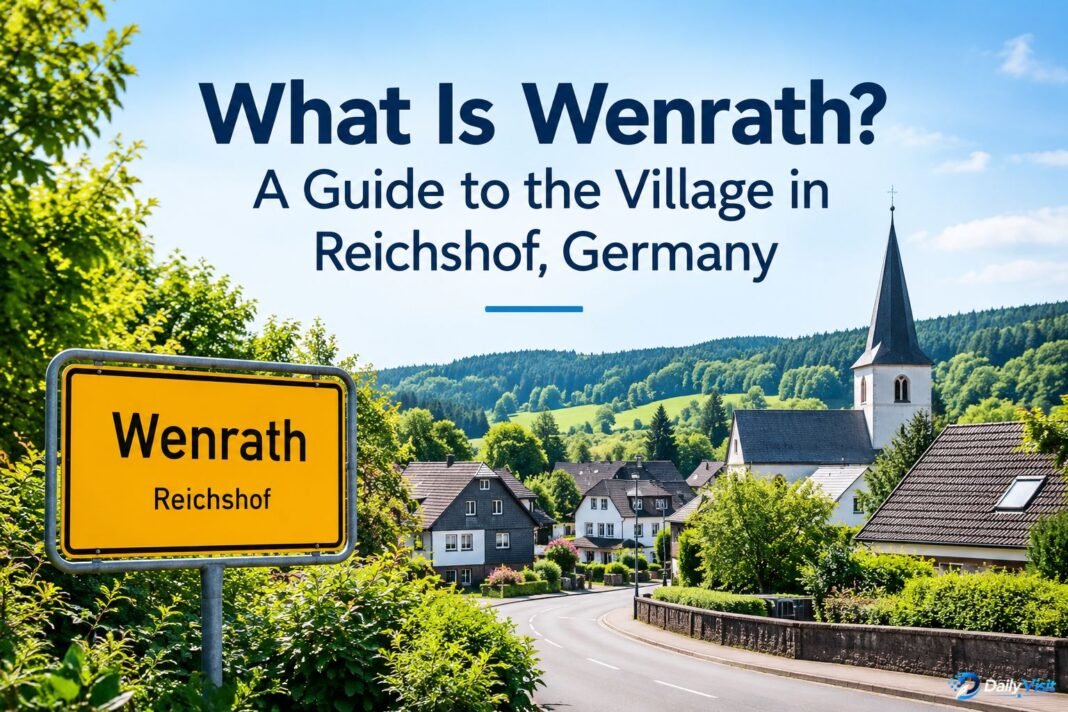

Wenrath is a small village within the municipality of Reichshof, located in the Oberbergischer Kreis district of North Rhine-Westphalia, Germany. It offers visitors a genuine slice of rural German life — rolling countryside, traditional architecture, and a slower pace than the nearby cities of Cologne and Bonn. This guide covers its location, heritage, culture, attractions, and practical travel information.
Most travelers heading to North Rhine-Westphalia beeline for Cologne’s cathedral or Düsseldorf’s riverside promenade. Few ever hear the name Wenrath. That’s exactly the point.
This village sits within Reichshof, a municipality built from dozens of small settlements scattered across the Oberbergisches Land. Wenrath is one of them — unassuming, uncrowded, and untouched by mass tourism. For travelers tired of queuing behind tour groups, that absence of crowds is the appeal.
This guide breaks down what makes Wenrath worth a detour. Expect details on its geography, its historical roots within the Reichshof region, the culture that shapes daily life there, and practical advice for planning a visit. No filler. Just what you need to decide whether this village belongs on your itinerary.
Where Is Wenrath Located in Germany?
Wenrath lies within the municipality of Reichshof, in the Oberbergischer Kreis district of North Rhine-Westphalia. North Rhine-Westphalia is Germany’s most populous state, anchored by major cities like Cologne, Düsseldorf, and Bonn.
Reichshof itself sits in the Oberbergisches Land, a hilly, forested region east of Cologne. It’s rural Germany at its most authentic — a patchwork of small villages, farmland, and woodland rather than one dense urban core.
How Far Is Wenrath From Major German Cities?
Reichshof’s location puts Wenrath within reasonable striking distance of several major hubs. Cologne and Bonn are the closest large cities, both accessible by car within roughly an hour depending on traffic and road conditions. This proximity makes Wenrath a realistic day-trip destination or a quiet overnight stop for travelers already exploring the Rhineland.
What Does the Landscape Around Wenrath Look Like?
The surrounding Oberbergisches Land is defined by rolling hills, mixed forest, and small river valleys. Villages like Wenrath are typically spread across this terrain in loose clusters rather than tightly packed streets. Expect green countryside, quiet lanes, and the kind of landscape that rewards walking and cycling over rushing from sight to sight.
What Is the History Behind Wenrath and Reichshof?
Small villages like Wenrath are part of a region with centuries of settlement history, shaped by agriculture, forestry, and the slow growth of rural communities typical of the Oberbergisches Land. Reichshof as an administrative municipality was formed through the consolidation of numerous smaller communities — a common pattern in post-war German municipal reorganization, where dozens of villages were grouped under a single local government for efficiency.
That consolidation history matters. It explains why Reichshof today governs such a wide, varied landscape of individual villages, each retaining its own name, identity, and local character rather than merging into one homogenous town.
How Has Wenrath Preserved Its Traditional Character?
Villages in the Oberbergisches Land are known for retaining traditional half-timbered and slate-faced architecture, a building style common throughout the Bergisches Land region. Local heritage preservation efforts across Reichshof’s constituent villages generally focus on maintaining this architectural character, keeping the rural, historic feel intact even as infrastructure modernizes.
What Is Local Life Like in Wenrath?
Life in a village the size of Wenrath centers on community. Residents in small Reichshof villages typically maintain close-knit social ties, with local associations, church groups, and volunteer fire brigades forming the backbone of community organization — a structure found throughout rural North Rhine-Westphalia.
Are There Festivals or Events Worth Planning a Trip Around?
Rural communities across the Oberbergisches Land commonly host annual village festivals (Dorffeste), seasonal markets, and church-calendar celebrations like Kirmes. These events bring residents together and often welcome visitors with local food, music, and traditional games. Checking the Reichshof municipal calendar ahead of a visit is the best way to time a trip around any scheduled community events.
What Food and Dining Options Exist Near Wenrath?
Dining options in small villages like Wenrath tend to be modest — expect local gasthäuser (inns) and bakeries rather than restaurant rows. Traditional Bergisches Land cuisine features hearty, rustic dishes: potato-based meals, regional sausages, and baked goods tied to seasonal and religious calendars. For a wider range of dining choices, Reichshof’s larger neighboring towns and nearby Cologne offer significantly more variety.
What Attractions and Activities Are Near Wenrath?
Wenrath’s draw isn’t a single landmark. It’s the surrounding landscape and the slower rhythm of rural life.
What Outdoor Activities Can Visitors Do Near Wenrath?
The Oberbergisches Land is well suited to hiking and cycling, with marked trails running through forest and farmland across the Reichshof area. Visitors who enjoy walking through quiet countryside, spotting traditional farmhouses, and covering ground on two wheels will find plenty to explore without needing a car for every stop.
Are There Historical Sites or Monuments to Visit?
Reichshof’s broader area includes churches, local chapels, and architectural landmarks typical of the Bergisches Land’s religious and settlement history. While Wenrath itself may not host a headline monument, its position within Reichshof means nearby villages and the municipal center offer accessible historical sites worth combining into a single day’s exploration.
What Nearby Attractions Complement a Visit to Wenrath?
Travelers based in or near Wenrath can extend their trip toward Cologne’s cathedral and old town, Bonn’s museums and former government quarter, or further into the Bergisches Land toward towns like Gummersbach, Reichshof’s larger municipal neighbor. Pairing Wenrath with one of these better-known destinations balances quiet countryside time with more conventional sightseeing.
How Do You Plan a Visit to Wenrath?
Where Can You Stay In or Near Wenrath?
Accommodation directly in a village the size of Wenrath is typically limited to guesthouses, private rentals, or farm stays — common across small Oberbergisches Land communities. Travelers wanting more hotel choice should base themselves in Reichshof’s larger towns or in nearby Gummersbach, then drive out to Wenrath for the day.
When Is the Best Time to Visit Wenrath?
Late spring through early autumn offers the most favorable weather for exploring the countryside around Wenrath on foot or by bike. Summer months typically bring the region’s village festivals, making June through September a strong window for travelers wanting both good weather and local events.
How Do You Get to Wenrath?
A car remains the most practical way to reach Wenrath and move between it and surrounding villages. Public transport within Reichshof’s rural areas tends to be limited compared to Germany’s larger cities, so travelers relying on trains and buses should plan routes carefully and expect longer connection times than in Cologne or Bonn.
What Amenities Are Available for Visitors?
Expect basic services — small shops, a local inn or bakery, and community facilities — rather than tourist infrastructure. Visitors should stock up on essentials in larger towns before heading into smaller villages like Wenrath, where amenities are intentionally minimal.
Frequently Asked Questions About Wenrath
Q1. What is Wenrath known for?
Wenrath is known as a small, traditional village within the Reichshof municipality, valued by travelers for its quiet countryside setting rather than any single major landmark.
Q2. Is Wenrath worth visiting as a tourist?
Wenrath suits travelers seeking authentic rural German life, countryside walks, and a break from crowded tourist destinations. Choose Wenrath if a slower pace matters more to you than headline attractions.
Q3. How long should you spend in Wenrath?
A half-day to full day is typically enough to explore Wenrath itself, making it well suited to a day trip from Cologne, Bonn, or a base elsewhere in Reichshof.
Q4. Is Wenrath accessible without a car?
Public transport options are limited in this part of the Oberbergisches Land. A car offers the most flexibility for reaching Wenrath and the surrounding villages.
Q5. What’s the closest major city to Wenrath?
Cologne and Bonn are the nearest major cities to Wenrath, both within roughly an hour’s drive depending on traffic conditions.
ALSO READ : Enntal Travel Guide: Discover Scenic Landscapes, Top Attractions, and Hidden Gems
Why Wenrath Deserves a Place on Your Germany Itinerary
Wenrath won’t appear on a top-ten list of German destinations. That’s precisely its value. It offers countryside, quiet, and authenticity — three things increasingly hard to find in Germany’s better-known tourist corridors.
Travelers willing to trade famous landmarks for genuine rural character will find Wenrath, and the broader Reichshof municipality surrounding it, a rewarding stop. Pair it with Cologne or Bonn for a well-rounded trip that balances city sightseeing with countryside calm.
Before you go, check Reichshof’s official municipal resources for up-to-date event calendars, accommodation listings, and transport information. A little planning turns a quiet village detour into one of the most memorable parts of your trip.