
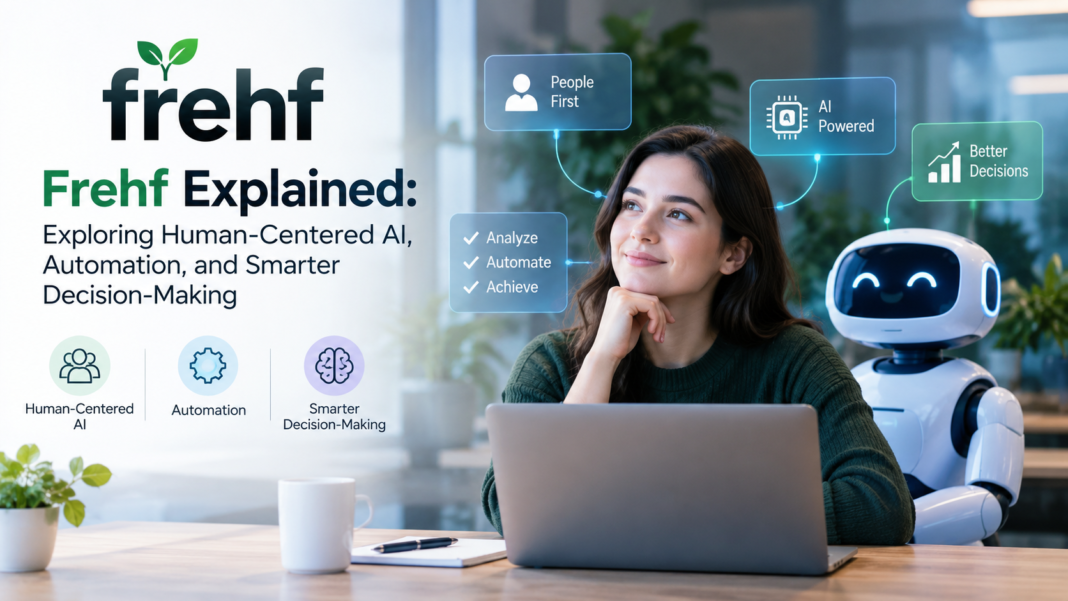

Frehf in today’s rapidly evolving digital world, the relationship between people and technology is becoming more important than ever. Frehf reflects an emerging approach that brings together human-centered artificial intelligence, intelligent automation, efficient workflows, and practical decision-making. By focusing on how technology can better support human needs, frehf offers a useful perspective on creating digital systems that are not only efficient but also easier to understand, manage, and apply in real-world situations.
What Is Frehf?
Frehf is an emerging framework linked with human-centered AI, automation, better workflows, and clearer decision-making. As artificial intelligence becomes increasingly integrated into workplaces and everyday digital experiences, organizations need practical ways to use these technologies while keeping people at the center of the process.
The idea behind frehf is not simply to automate as many tasks as possible. Instead, it focuses on creating a productive relationship between people and intelligent technology. AI can handle repetitive processes, organize information, recognize patterns, and support routine activities, while humans can contribute judgment, creativity, experience, and context.
Because frehf is an emerging concept, its exact interpretation may vary depending on how it is applied. However, its core ideas connect with a broader shift toward technology that is useful, understandable, efficient, and designed around human needs.
Understanding the Frehf Framework
Modern organizations depend on digital systems for communication, information management, customer interactions, planning, and daily operations. While these technologies can increase productivity, poorly designed systems can also make processes more complicated.
The frehf framework can be viewed as a way of thinking about how technology should be integrated into these environments. Rather than focusing only on technological capabilities, it considers whether those capabilities actually improve the experience and performance of the people using them.
Several areas are closely connected with the frehf concept, including:
- Human-centered artificial intelligence
- Intelligent automation
- Workflow optimization
- Decision support
- Information management
- Human oversight
- Continuous improvement
Together, these elements encourage organizations to use technology with a clear purpose.
Frehf and Human-Centered AI
Human-centered AI is one of the strongest ideas associated with frehf. Artificial intelligence can analyze substantial amounts of information, identify patterns, generate recommendations, and perform repetitive tasks much faster than people in many situations.
However, AI does not always understand the complete context behind a decision.
A human-centered approach recognizes that people remain essential to the process. AI can provide insights and recommendations, but users should have the ability to understand those outputs, evaluate them, and determine how they should be used.
For example, an AI system could examine customer feedback and identify frequently mentioned problems. Instead of automatically changing company policies, the system could present its findings to a team. Human decision-makers could then consider customer expectations, business objectives, and other relevant factors before taking action.
This combination of technological efficiency and human judgment is an important principle behind frehf.
How Frehf Connects With Automation
Automation is another important component of the frehf concept. Many businesses perform repetitive activities every day that consume valuable time but do not always require continuous human attention.
These activities may include:
- Organizing digital information
- Processing routine data
- Sending notifications
- Managing administrative tasks
- Sorting documents
- Monitoring predefined processes
- Preparing routine reports
Automating suitable tasks can allow employees to concentrate on work that requires creativity, communication, strategic thinking, and problem-solving.
However, effective automation is not simply about reducing manual work. Organizations must first understand the process and determine where automation can provide genuine value.
A frehf-oriented approach therefore emphasizes purposeful automation. Technology should simplify work rather than introduce unnecessary complexity.
Improving Workflows With Frehf
A workflow represents the sequence of steps required to complete a task. When a workflow includes unnecessary approvals, duplicated information, repeated data entry, or unclear responsibilities, productivity can suffer.
The principles associated with frehf can help organizations examine these processes and identify areas for improvement.
Consider a company where employees manually move information between multiple systems. This can consume considerable time and create opportunities for mistakes. An automated connection between those systems could reduce repetitive work while allowing employees to concentrate on reviewing important information.
The objective is not simply to make a workflow faster. A strong workflow should also be clear, reliable, manageable, and aligned with the needs of its users.
Frehf and Smarter Decision-Making
Organizations today often have access to more information than individuals can realistically process manually. This creates an opportunity for AI-powered decision support.
A frehf-based approach can use intelligent systems to organize information, highlight patterns, and provide useful recommendations.
For example, an automated system might compare historical performance, identify unusual changes, or summarize large datasets. A decision-maker can then review these findings and consider different options.
This highlights an important distinction:
Smarter decision-making does not necessarily mean automated decision-making.
In many situations, the most effective outcome comes from combining machine-generated insights with human experience and judgment.
Why Human Oversight Matters
As AI systems become more advanced, human oversight remains important. Artificial intelligence can sometimes misunderstand context, generate inaccurate information, or produce recommendations that require further evaluation.
Human involvement provides an additional layer of control.
People can:
- Review AI-generated results
- Identify unusual circumstances
- Apply real-world context
- Correct errors
- Set priorities
- Make sensitive decisions
- Monitor automated processes
For this reason, human oversight can be considered a key part of the broader frehf approach.
The goal is not to choose between people and technology. Instead, it is to determine how both can complement each other effectively.
Potential Benefits of Frehf
When applied thoughtfully, the principles associated with frehf can provide several potential advantages.
Greater Efficiency
Automation can reduce time spent on repetitive tasks, allowing people to focus on higher-value responsibilities.
Better Workflows
Organizations can identify inefficient steps and redesign processes around actual user requirements.
Improved Information Management
AI tools can help organize large volumes of information and make relevant insights easier to access.
Better Decision Support
Intelligent systems can provide comparisons, recommendations, and patterns that help people evaluate different possibilities.
Stronger Human-Technology Collaboration
By keeping human needs in focus, technology can function as a practical assistant rather than simply replacing manual processes.
Challenges and Limitations
Although the ideas behind frehf have potential, implementing AI and automation effectively requires careful planning.
One major consideration is data quality. AI systems depend on the information provided to them, and inaccurate or incomplete data can result in unreliable outputs.
Privacy and security are also important. Automated systems may process large amounts of information, so appropriate safeguards are necessary.
Another concern is over-automation. Not every task should be handled by an automated system. Activities involving empathy, creativity, complex judgment, or significant consequences may require direct human involvement.
Training is another consideration. Employees need to understand how new systems work, how to evaluate their outputs, and when human review is necessary.
The Future of Frehf
As artificial intelligence and automation continue to develop, the principles associated with frehf may become increasingly relevant. Organizations are likely to focus not only on what technology can automate but also on how technology can improve the human experience.
Future digital environments may combine AI assistants, automated workflows, data analysis, and human oversight within connected systems. Routine activities could happen automatically while people remain responsible for important decisions, creative work, and strategic direction.
This suggests that the future of technology may not be about choosing between humans and machines. Instead, it may be about creating better ways for them to work together.
Final Thoughts
Frehf represents an emerging framework linked with human-centered AI, automation, improved workflows, and clearer decision-making. While the term is still developing, the ideas associated with it reflect an important direction in modern technology.
The most useful digital systems are not necessarily those that automate everything. They are the systems that solve real problems, simplify workflows, organize information, and support people where human judgment remains essential.
By bringing together intelligent automation and human-centered thinking, frehf provides a useful perspective on building technology that is more practical, efficient, understandable, and supportive in an increasingly digital world.